Michael Kors, often abbreviated as MK, refers both to an American designer and the fashion brand he founded in the early 1980s in New York. The positioning is based on a precise concept: to offer accessible luxury, with clean lines and quality materials, at prices lower than traditional luxury.
This positioning has made MK one of the most visible brands in the leather goods and accessories segment worldwide.
Commercial Repositioning of Michael Kors: What Changes for Buyers
Capri Holdings, the parent company of Michael Kors, has initiated a strategic shift that directly alters the shopping experience. The stated goal is to reduce the frequency of promotions to better defend full-price sales. In practice, this means fewer discounts in-store and online.
This choice is accompanied by a renovation of the in-store experience. Capri Holdings is focusing on refreshing the products presented and rethinking the customer journey to justify the full price. For those who primarily followed the brand through sales or private sales, the change is tangible: discounts are becoming rarer and more targeted.
The brand has also opened a store on TikTok Shop, a channel that has reportedly exceeded initial expectations according to Capri’s statements at an investor conference. The associated influencer network has expanded, with the explicit goal of reaching a younger clientele than the brand’s historical base. This digital shift does not replace physical stores, but it redefines how MK connects with new buyers.
To learn everything about the MK brand, one must now integrate this commercial dimension: the average price of an MK bag purchased in-store tends to increase, not because catalog prices are skyrocketing, but because opportunities to buy it on promotion are becoming scarce.
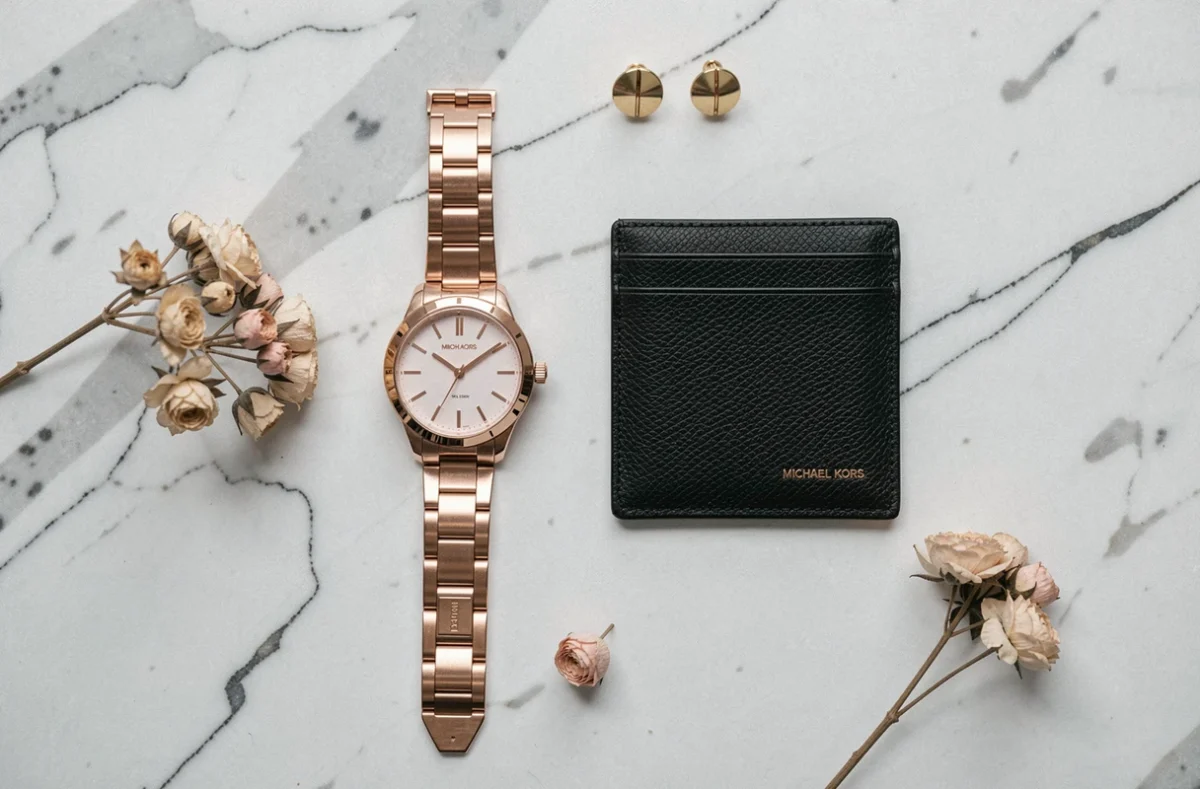
Flagship Bags of the MK Brand: Hamilton, Laila, Nolita, and Sammy
The Michael Kors bag range is organized around a few identifiable models, each playing a specific role in the product strategy.
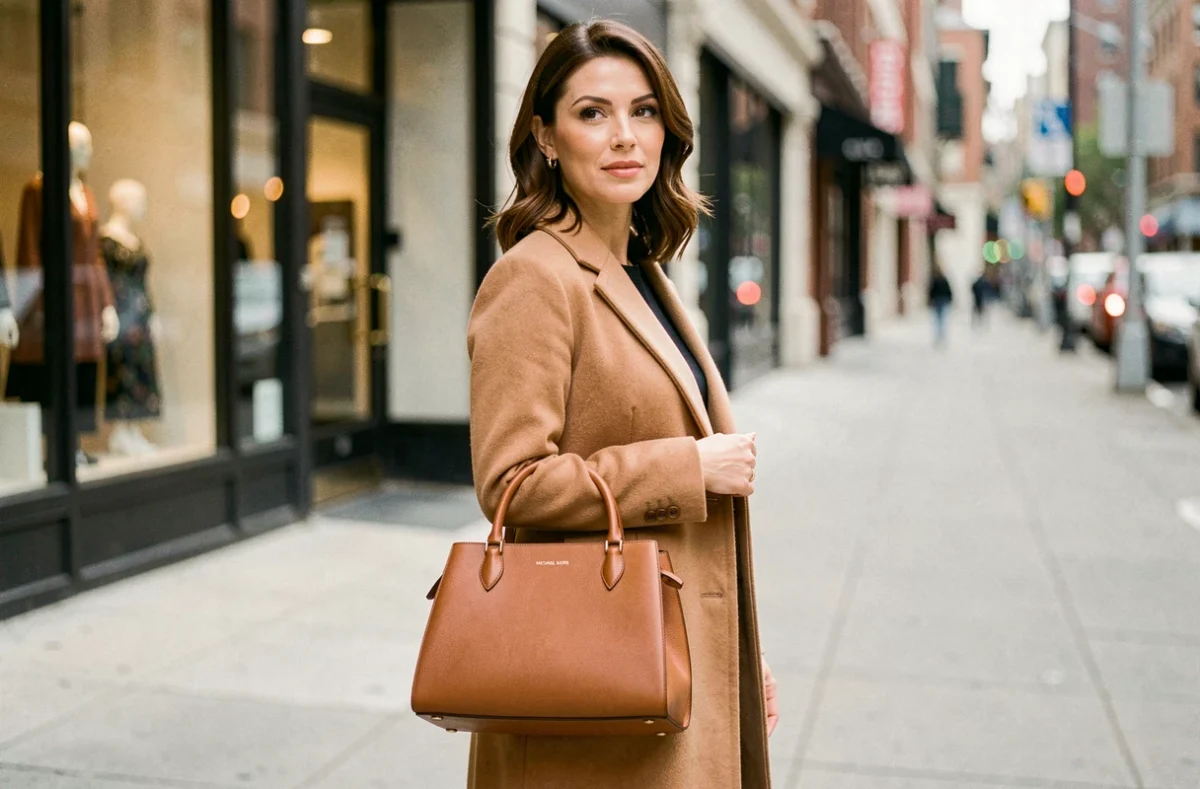
- The Hamilton remains the signature model. Recognizable by its gold padlock and structured handles, it embodies the classic New York style that Michael Kors has championed since his beginnings.
- The Laila and the Nolita are positioned as full-price pieces in main stores. Their more contemporary design targets a clientele looking for a branded bag without the overly recognizable repeated logo aesthetic.
- The Sammy is reserved for outlet stores. This model allows MK to maintain an accessible offer without discounting the references sold in traditional stores.
This segmentation between main stores and outlets is a point that many buyers discover afterward. A bag purchased in an outlet is not a discounted store bag: it is a product specifically designed for this channel, with materials and finishes that may differ.
Beyond Bags: Accessories and Ready-to-Wear
Michael Kors also produces watches, sunglasses, shoes, and ready-to-wear for men and women. The collections revolve around a style that the designer himself describes as simple and classic. The cuts remain clean, colors often neutral, with golden or silver touches on the accessories.
MK ready-to-wear occupies a less visible place than leather goods in the brand’s notoriety, but it represents a growth lever that Capri Holdings wishes to develop, particularly through men’s collections.
Michael Kors Style: A Designer True to an Aesthetic Since His Beginnings
Michael Kors showed an instinct for simplicity early on. A frequently cited anecdote shows him as a child advising his mother to remove the embellishments from her wedding dress, which he deemed too busy. This approach, doing more with less, has structured his entire career.
Unlike other American designers who radically renew their aesthetics each season, Kors has maintained a stable style over several decades. The cuts are classic, the fabrics are of high quality, and the overall look avoids overly pronounced fashion effects. This consistency is both an asset (loyal customers know what they are buying) and a limitation (the brand can appear predictable compared to more experimental competitors).
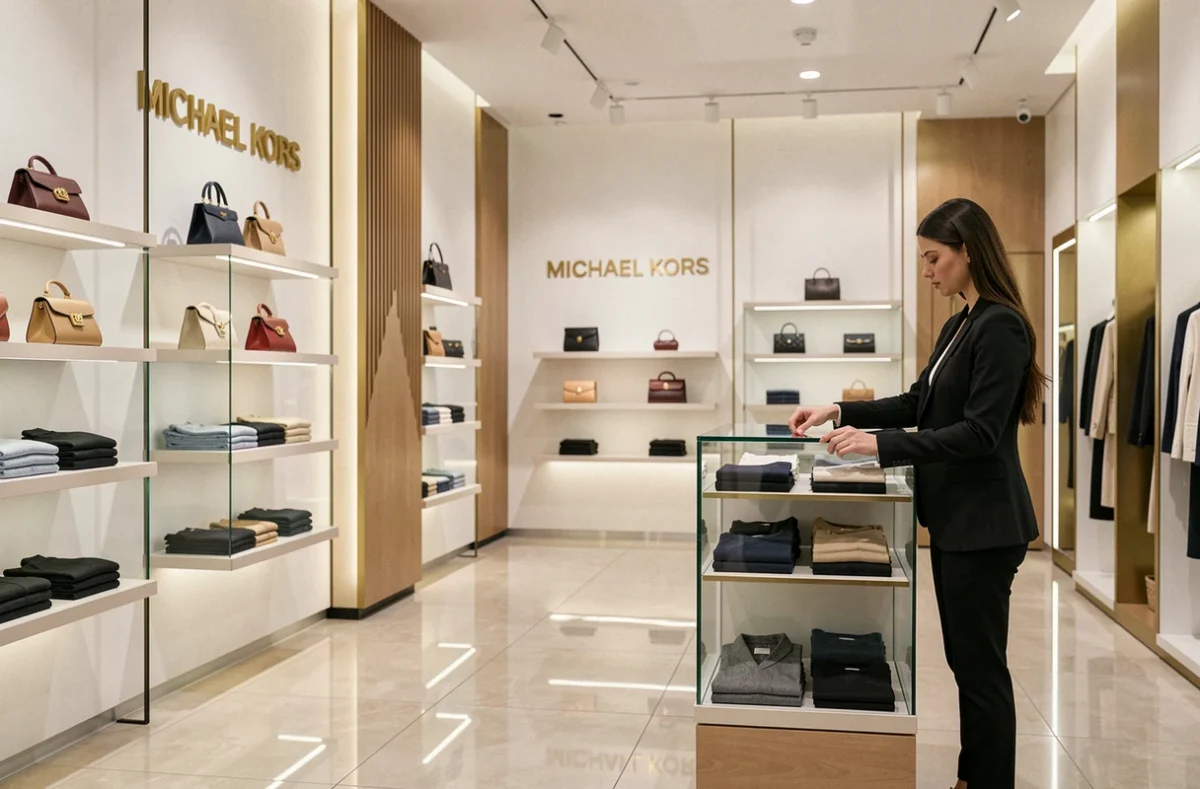
The accessible luxury according to MK relies on a delicate balance. The materials must justify a price higher than fast fashion, without reaching the cost of traditional luxury. Perceived quality depends greatly on the model chosen and the purchase channel: a bag bought in a main store and an outlet bag carry the same logo, but the finishing and leather used are not identical.
Opinions on Michael Kors: What the Ongoing Repositioning Reveals
Opinions on the MK brand often divide into two camps. On one side, a clientele satisfied with the style-price ratio and the immediate recognition of the logo. On the other, criticisms regarding the brand’s trivialization, linked to years of frequent promotions and very broad distribution.
The repositioning initiated by Capri Holdings aims precisely to address this second criticism. Fewer promotions, renewed products, an improved in-store experience: the goal is to elevate the brand’s perception. Results remain uneven across markets. Some regions show positive full-price sales, while others exhibit signs of fragility.
For a buyer, the practical question is simple: will a Michael Kors bag purchased today at full price in a renovated store retain its value better than a model discounted a few years ago? The answer will depend on Capri Holdings’ ability to maintain this strategy of reducing discounts over time, without losing the price-sensitive buyers who formed a significant part of the MK clientele.