
A oiled parquet that sticks after using an overly aggressive cleaner, a pine terrace that whitens in patches, a waxed piece of furniture that loses its patina: the problem rarely comes from the wood, almost always from the product used. Choosing a wood cleaner suitable for the finish and use of the surface prevents these damages, often irreversible without sanding.
Wood finish and cleaner compatibility: the criterion that comparisons overlook
There are at least four main families of finishes on common wood surfaces: varnish, vitrification, oil (including hard oils like hardwax), and wax. Each reacts differently to the pH of the cleaning product applied.
Read also : How to Choose the Best Men's Down Jacket in 2025
Alkaline cleaners, very common in supermarkets, attack modern finishes based on hard oil and matte varnishes. The FCBA (Forêt Cellulose Bois-construction Ameublement Technological Institute) conducted tests showing that high pH products degrade hardwax oils and matte varnishes faster than one might think. This results in a whitish film or wood that no longer absorbs the saturator.
For vitrified or glossy varnished floors, a neutral pH cleaner is sufficient in most cases. On a waxed piece of furniture, one should stick to diluted black soap or a liquid maintenance wax. For oiled wood, a product specifically formulated for oiled surfaces is necessary, often sold by the original oil manufacturer. This point is well detailed in the MetamorpHouse guide for wood, which classifies products by type of finish.
See also : How to Choose the Right Insurance to Effectively Protect Your Assets
Indoor or outdoor wood cleaner: two distinct maintenance logics
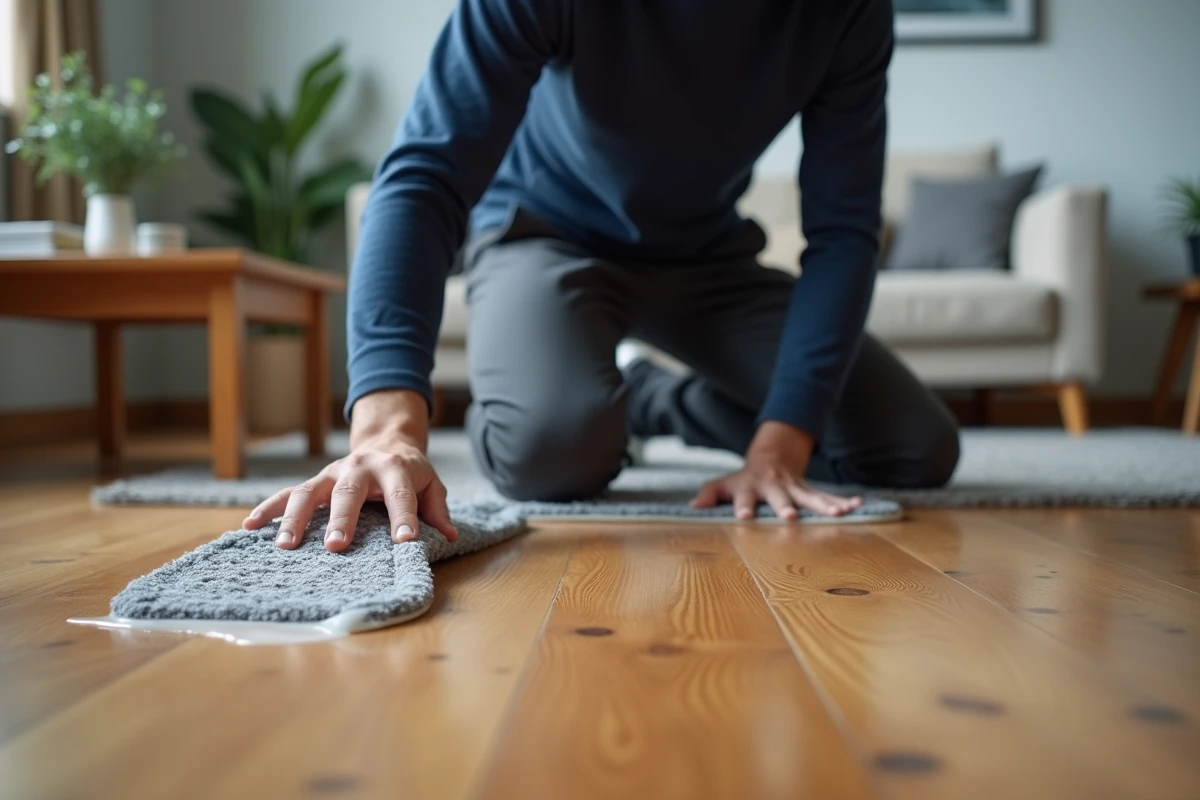
A living room parquet and an exotic wood terrace do not face the same aggressions. Confusing the two leads to using an under-dosed product outside or an overdosed one inside.
Terrace and cladding: cleaning then protection
Outside, wood grays under the effect of UV rays that oxidize the lignin on the surface. This graying is natural and reversible with an appropriate brightener. The cleaning of a terrace follows a precise sequence:
- A fungicidal cleaner or a product based on oxalic acid removes moss, algae, and black stains without damaging the fibers
- A brightener (often based on oxalic acid or citric acid) restores the original color after thorough rinsing with clear water
- A saturator applied to dry wood protects the surface for several months, penetrating the fibers without forming a film
Applying a saturator on poorly cleaned wood is like sealing dirt in the pores. It is common to see permanently stained terraces because the cleaning step was rushed or skipped.
Parquets and furniture: gentleness and frequency
Indoors, the challenge is to remove dust and everyday stains without altering the finish. A slightly damp microfiber cloth remains the basic gesture. The cleaner is only used once or twice a month, not with every cleaning.
For parquets, products like SPADO Parquet Cleaner or Starwax gentle cleaner are formulated for vitrified and laminated surfaces. They leave a proper shine without intensive scrubbing. On waxed wood, liquid beeswax (like O’Cedar) nourishes and protects at the same time.
Wood cleaners and ecological claims: what has changed since the Green Claims directive
Since the adoption of the European directive 2024/825, known as “Green Claims,” in March 2024, a household product manufacturer can no longer claim “eco-friendly” or “environmentally friendly” without verifiable proof. Several brands have already modified their packaging between 2024 and 2025 to remove or clarify these mentions.
In practical terms, when purchasing a wood cleaner in 2026, an official label (Ecocert, EU Ecolabel) is worth more than a “green” house logo. “Fragrance-free” and hypoallergenic formulations are also progressing significantly in the European market, driven by brands like L’Arbre Vert or Rainett that have reformulated their wood ranges by reducing allergens (removal of MIT/CMIT, fewer synthetic fragrances).
For children’s rooms or confined spaces, this trend towards “fragrance-free” is not just a marketing argument: the volatile organic compounds released by certain scented cleaners linger for several hours on wood surfaces, especially when the wood is porous.
Concrete selection criteria for a suitable wood cleaner
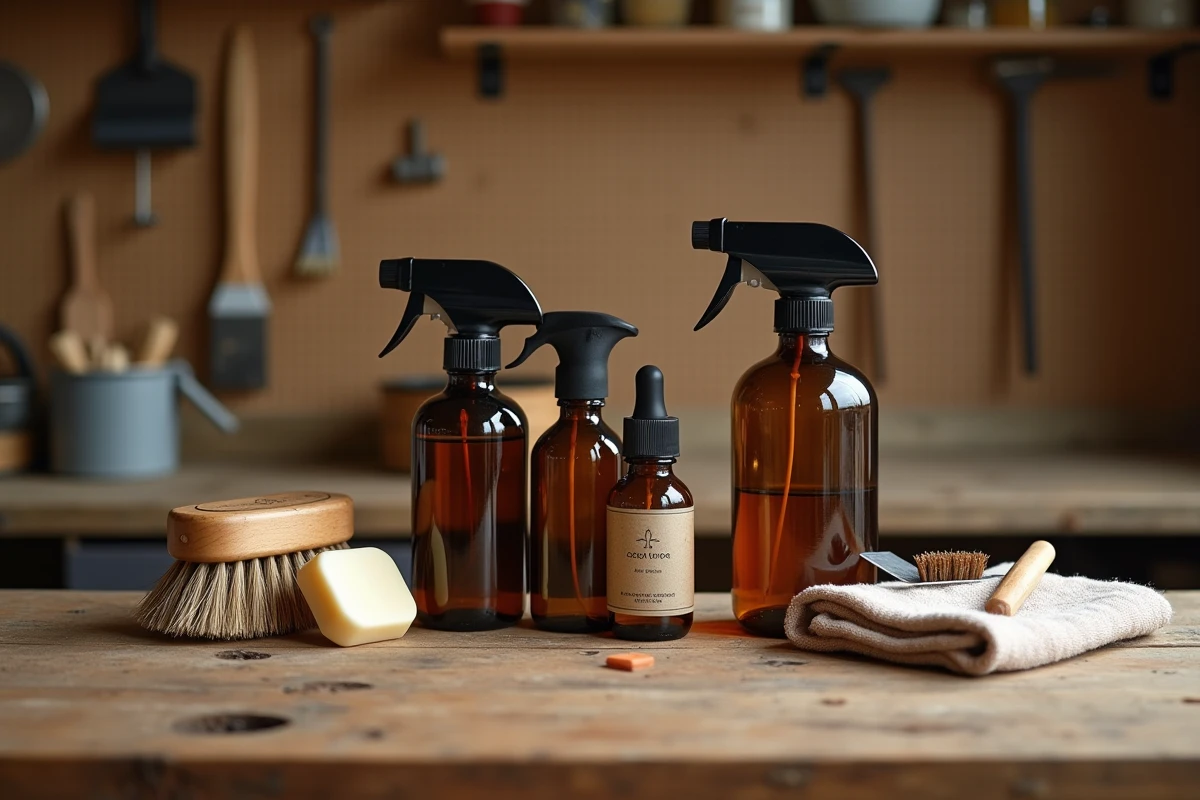
Rather than an abstract rating grid, here are the questions to ask when making a purchase:
- What is the finish of the surface? Varnish, oil, wax, or raw wood – the pH and composition of the product depend directly on this
- Is the surface indoor or outdoor? An indoor product lacks the concentration and fungicidal agents necessary for outdoor use
- Does the cleaner leave a film or penetrate? On oiled parquet, a film-forming product creates a layer that prevents future renovation
- Does the formula contain fragrances or MIT/CMIT? In a closed room, responses vary on this point, but sensitive individuals benefit from choosing hypoallergenic versions
Choosing a concentrated product to dilute is often cheaper over the year than a ready-to-use spray and allows for adjusting the dosage according to the level of dirt.
A versatile “all surfaces” wood cleaner doesn’t really exist. Products claiming this versatility are generally very mild neutral pH cleaners, adequate on laminate or glossy varnish, but insufficient on a dirty terrace and potentially harmful on hard oil. It is better to have two well-chosen products than one that is not perfectly suited to anything.