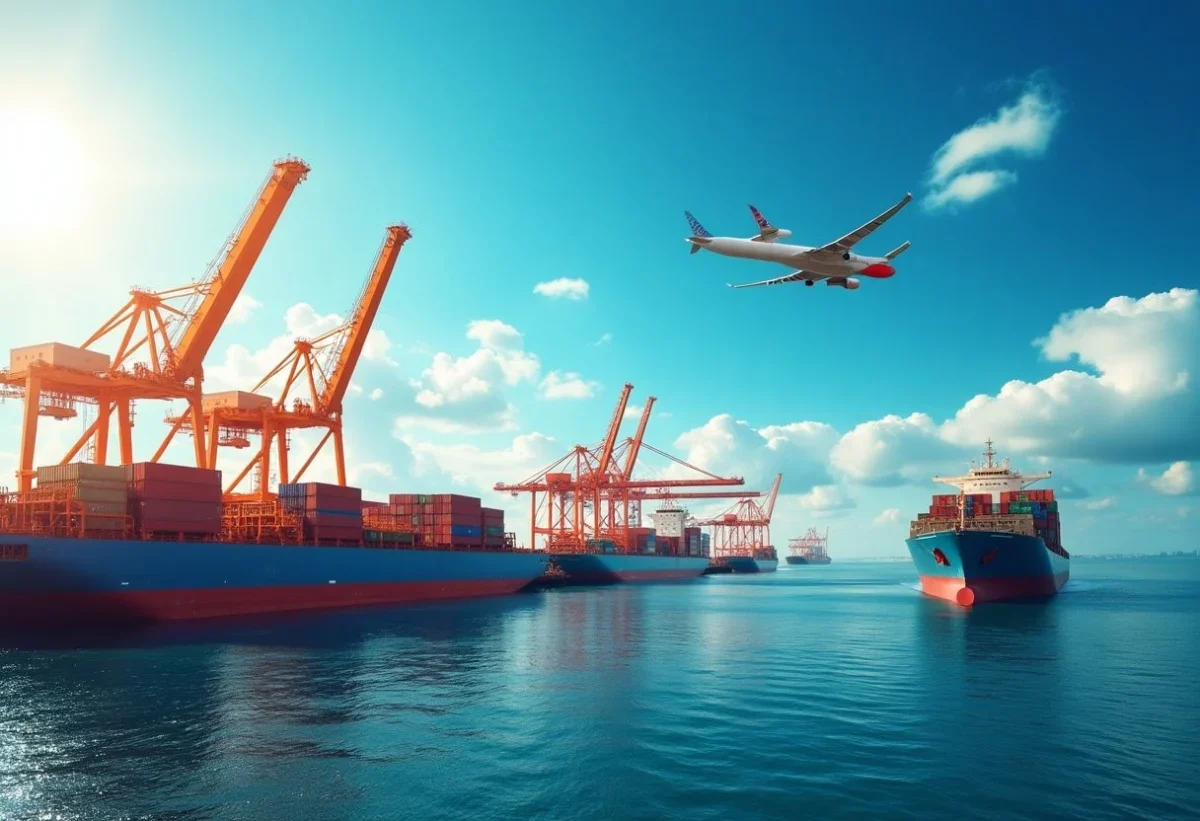
International transport is a crucial element of our globalized economy. It constitutes the venous network through which goods flow, connecting continents to meet the needs of consumers and businesses. With millions of tons of products shipped every day, it impacts not only the global economy but also social and environmental aspects. Its importance goes beyond the transportation of goods, as it also shapes our way of living, interacting, and consuming. The world of international transport is complex, with its many players and infrastructures.
International transport modes
Different modes of transport are used to move goods across the globe, each with its advantages and limitations.
- Maritime transport: It is the backbone of global trade, with about 80% of exchanges carried out by sea. Container ships transport immense volumes of goods, offering unmatched cost advantages for long distances.
- Aerial transport: Although it represents a small share of the total volume, it is crucial for perishable or high-value products requiring quick delivery.
- Rail transport: Mainly used for heavy and bulk goods, it is popular in Eurasia where the vast rail network efficiently connects countries.
- Road transport: Essential for last-mile deliveries, it often complements other modes of transport to bring goods to their final destination.
Environmental challenges of transport
The ecological impact of international transport is a growing concern. CO2 emissions, noise pollution, and the degradation of marine ecosystems are some of the associated issues.
To address these challenges, industry players are investing in cleaner technologies and alternative fuels. Ships powered by liquefied natural gas (LNG) are becoming increasingly common, as are more fuel-efficient aircraft. Rail transport, which is less polluting than road or maritime transport, is often favored on certain corridors.
Initiatives such as route optimization and improved logistics efficiency also contribute to reducing the environmental footprint of the sector.
Regulations and safety in international transport
Ensuring safety and compliance with international standards is vital for international transport. Regulations govern practices to ensure the safety of goods and the security of workers.
- Organizations like the International Maritime Organization (IMO) and the International Civil Aviation Organization (ICAO) set safety standards.
- Customs play a crucial role in controlling goods, ensuring the legality and compliance of incoming and outgoing products.
- Companies invest in advanced tracking systems to monitor in real-time the location and status of shipments.
Cybersecurity is also becoming a major concern with the increasing digitization of logistics processes, necessitating enhanced measures to protect sensitive data.
The future of international transport
The international transport sector is in constant evolution, influenced by technological innovations and geopolitical changes.
The development of artificial intelligence and robotics is transforming logistics, making supply chains more efficient and resilient. Autonomous transport solutions, such as drones and driverless trucks, could revolutionize the way goods are delivered. Additionally, the strengthening of trade agreements and the trend to relocate certain productions are creating new dynamics in the transport of goods.
Amid these transformations, international transport must continuously adapt to the changing needs of markets and consumers.