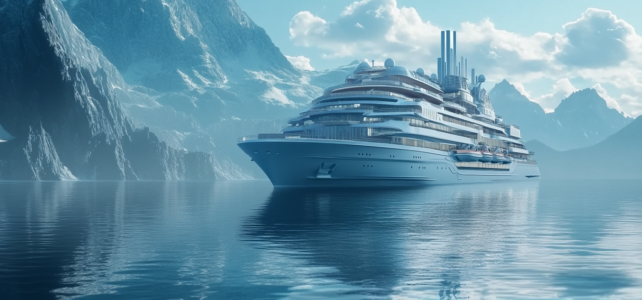
The seas and oceans of the world are traversed by ships of all kinds, but none capture the collective imagination quite like a cruise ship. These giants of the sea, true floating cities, embody luxury, adventure, and escape. When one thinks of a cruise ship, unforgettable vacations, distant horizons, and exotic stops immediately come to mind. But how do we actually refer to these imposing maritime constructions? What specific and poetic terms are they adorned with in the maritime lexicon? And why does their name hold such importance in the tourism industry and in our imagination?
Maritime Terminology and Designation of Cruise Ships
In the nautical world, the terms used to designate a cruise ship are not limited to just “ship.” On the contrary, each word used carries a rich meaning and maritime heritage.
Further reading : The Smallest Ship of Costa Cruises: A Compact Marvel on the Seas
- Ocean liner: This term evokes elegance and grandeur. Historically, an ocean liner refers to a ship intended for passenger transport, primarily over long distances. The word itself derives from “packet,” originally indicating the transport of mail and goods.
- Cruise ship: Commonly used, it emphasizes the primary function of the vessel, which is to offer a cruise, a pleasure trip where the journey is as important as the destination.
- Leisure boat: Although more general, this term includes cruise ships in the category of vessels used for pleasure and entertainment, rather than for transporting goods or for military purposes.
The Names of Ships: A Symphony of Meanings
The choice of a cruise ship’s name is never left to chance. It must reflect the spirit of the company, entice travelers, and evoke images of distant journeys and adventures.
Many companies, such as Costa Cruises, choose names that invoke travel concepts such as Explorer or Voyager. Others prefer names borrowed from mythological deities, adding a mystical and epic dimension to the journey. This creates an emotional connection between the passenger and the ship, transforming a simple crossing into a true odyssey.
Further reading : The latest MSC ship: Discover the jewel of the seas
Cultural and Economic Impact of Cruise Ships
Cruise ships have shaped popular culture and the global tourism economy. Their influence extends far beyond the simple experience of sailing.
- They have become symbols of social status, often associated with glamour and elegance, popularized by films and television series.
- Economically, they represent a substantial part of the tourism industry, generating thousands of jobs worldwide, whether on board or in port destinations.
- Environmentally, the challenges posed by these giants of the sea have led to increased awareness of the need to make maritime tourism more sustainable and ocean-friendly.
- Finally, cruises, through their varied itineraries and cultural offerings, contribute to cultural exchange between peoples and the discovery of the riches of world heritage.
How Cruise Ships Captivate the Imagination
The allure of cruise ships goes beyond their function as mere means of transport. They have become characters in their own right in our collective imagination.
On board, each cruise offers a unique immersive experience. Passengers can escape into worlds of entertainment, gastronomy, and cultural discovery while sailing towards destinations often otherwise inaccessible. These ships are designed to be microcosms of civilization, reflecting the cultural diversities of the world while offering unparalleled comfort.
Each journey aboard a cruise ship is an invitation to exploration, both inward and outward, where horizons blend with the dreams and expectations of travelers. These giants of the sea continue to captivate the imagination with their promise of new adventures and discoveries.
In this journey through the terminology and impact of cruise ships, we realize the importance of these words that designate much more than mere vessels. They evoke stories, dreams, journeys, and capture the very essence of human exploration. These names, carefully chosen, become the floating ambassadors of our innate desire for escape and discovery, uniting people through the promise of distant horizons. Rather than mere labels, these terms are open windows to the unknown, inviting everyone to embark on a journey like no other.