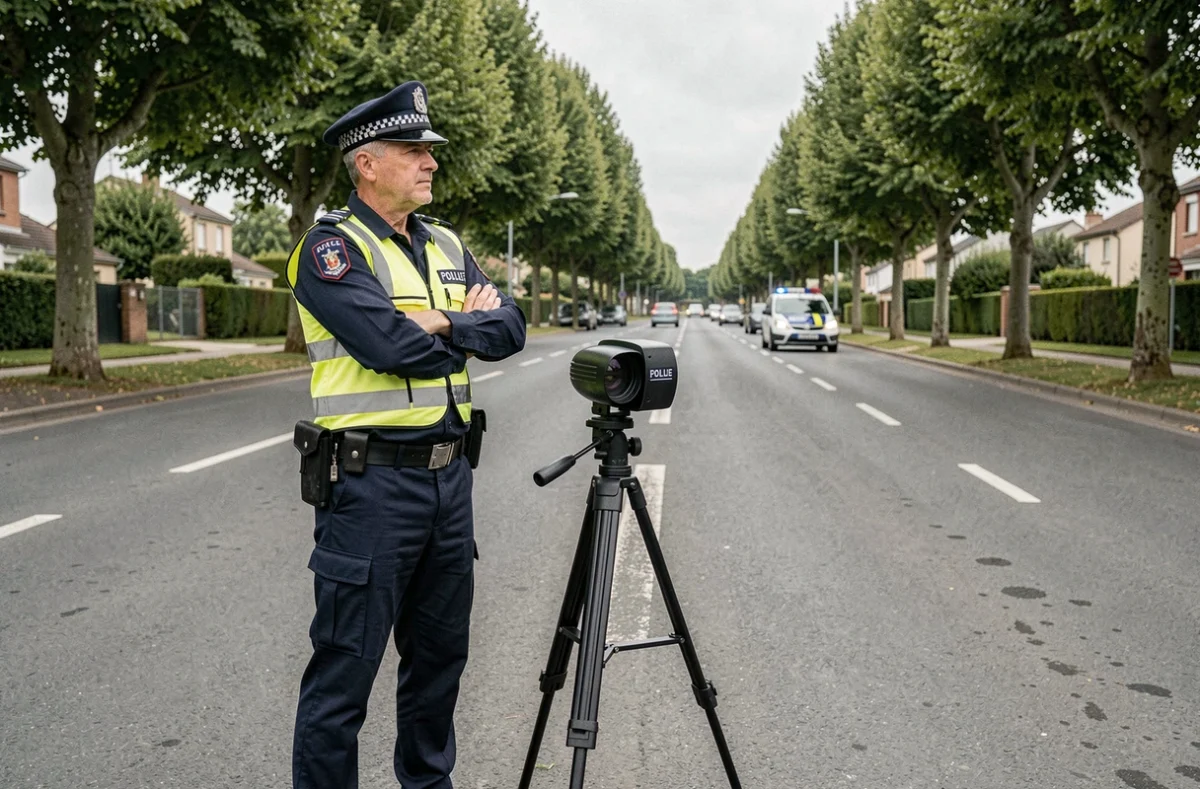
A handheld laser speed meter (binocular-style speed gun) measures a vehicle’s speed without triggering a flash or taking a photo. The officer points the device, records the speed and notes the license plate. This technical setup raises a specific question: when no roadside stop takes place, what action can the police take following the check, and where are the legal limits of the procedure?
Financial liability of the registered keeper and the driver’s guilt: two distinct concepts
The starting point is a distinction many drivers are unaware of. When speeding is detected with a handheld speed gun and the vehicle is not stopped, the report identifies the vehicle (license plate, make, model), but not necessarily the person behind the wheel.
The Highway Code provides that the registered keeper is liable for the fine, even if they have not been identified as the driver. This is financial liability. It concerns payment of the fine, not the deduction of penalty points.
In a ruling dated November 18, 2025, the Court of Cassation reiterated that, when no ticket is issued on the spot, the report alone is not enough to establish who was driving. For penalty points to be deducted, the driver’s personal guilt must be proven or admitted. In cases involving a police speed gun check without a stop, this distinction fundamentally changes the consequences drivers may face.
Paying the fine within 45 days constitutes acknowledgment of the offence and results in penalty points being deducted. Contesting the fine or naming another driver suspends this process.
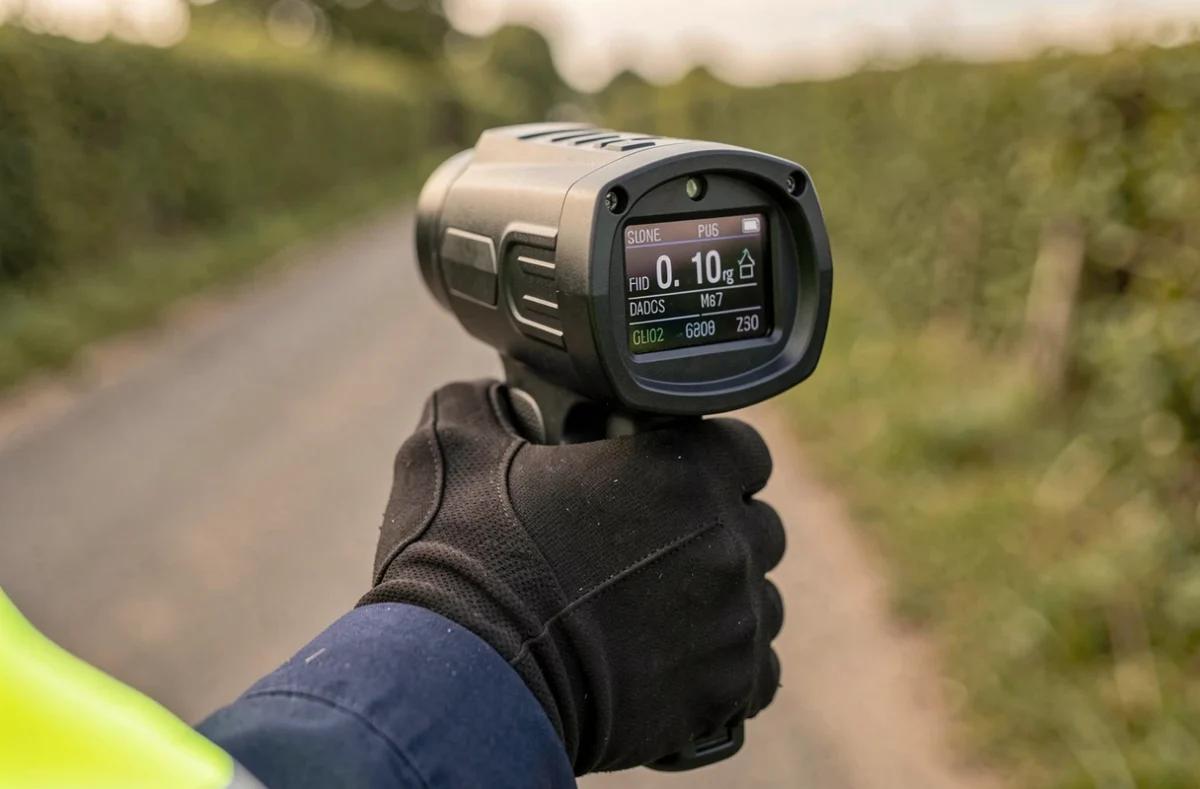
Fine by post after a handheld speed gun check: legal basis and limitation period
The Highway Code allows officers to record certain offences without stopping the vehicle immediately. Speeding is one of them. The officer records the license plate, enters the measurement in a report, and the notice of violation is sent to the registered keeper’s home address.
The absence of a roadside stop does not invalidate the check. The procedure is based on the report drawn up by the sworn officer, whose findings are presumed accurate unless proven otherwise. Neither a flash nor a photo is required for the measurement to be legally valid.
The procedure is subject to a limitation period. If no notice of violation is received within twelve months of the offence, the right to prosecute expires. After that period, no prosecution can proceed.
What the notice of violation contains
The notice sent by post must include several mandatory details. If any are missing or incorrect, this may constitute a procedural defect that can be raised when contesting the fine:
- The exact date, time and location of the check, as well as the measured speed and the speed recorded after applying the technical tolerance
- The vehicle’s registration number and details of the speed meter used (make, serial number)
- The identity and official capacity of the issuing officer, including confirmation that they have taken the required oath
- The amount of the fixed fine, the number of penalty points that may be deducted, and how to pay or contest it
Contesting a handheld speed gun ticket: technical grounds for challenge
Contesting a ticket issued following a handheld speed gun check is not simply a matter of citing the absence of a roadside stop. Courts require specific arguments relating to the case file itself.
The speed meter’s metrology logbook
Every laser speed meter must undergo periodic checks documented in a metrology logbook. This document records the inspection dates, results and whether the device complies with requirements. In a ruling dated May 20, 2025, the Court of Cassation faulted a lower court for failing to address challenges concerning this logbook. Requesting access to the metrology logbook is a concrete line of defence.
Identifying the driver
Without a photo or a roadside stop, proving that the registered keeper was behind the wheel relies on a body of evidence. On January 7, 2025, the Court of Cassation accepted that judges could identify the driver based on consistent evidence, but the absence of a roadside stop remains an objective limitation on the evidence.
Naming another driver (a procedure available to both companies and individuals) transfers financial liability. Failing to name the driver means the registered keeper may have to pay the fine, but does not automatically result in penalty points being deducted.
Other valid grounds for contesting a ticket
- The officer’s line of sight in relation to the vehicle, which may distort the measurement if the laser beam is not aligned with the vehicle’s direction of travel
- Weather conditions at the time of the check (rain, fog), which may affect the laser’s reliability
- The failure to state the technical tolerance on the report, or the incorrect application of that tolerance
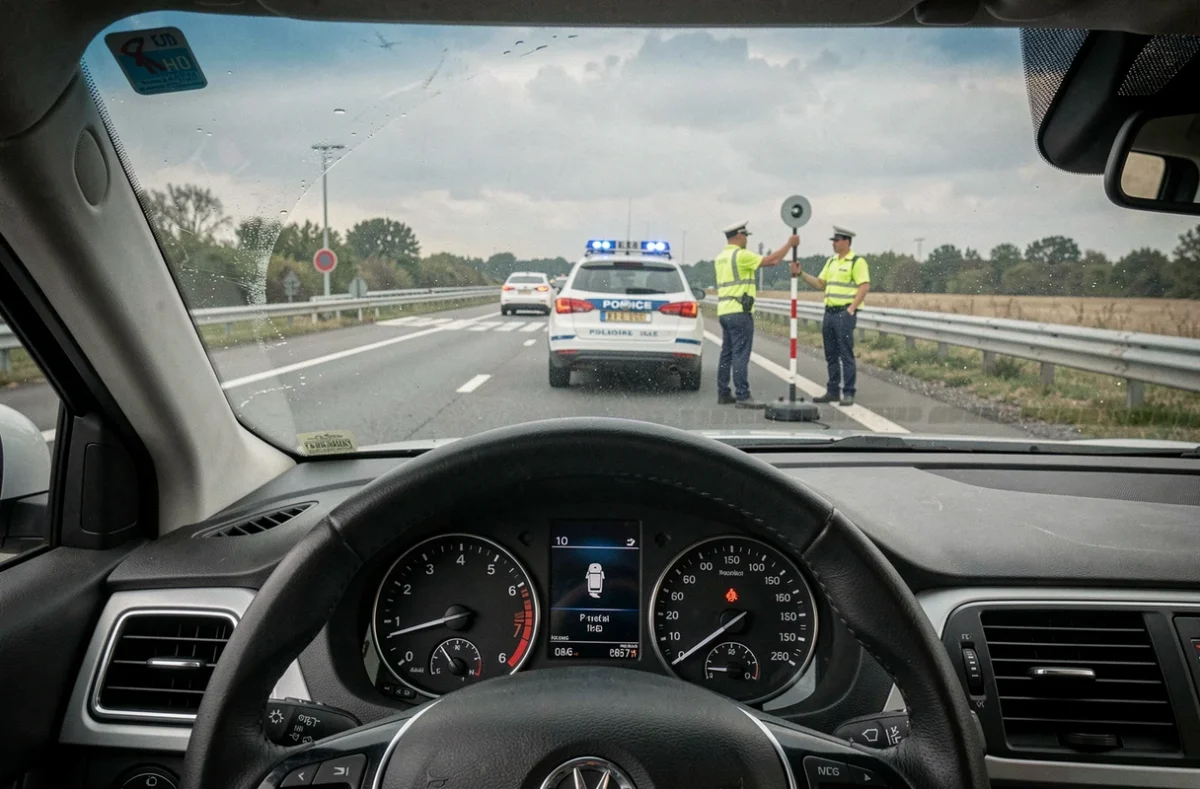
Technical tolerance applied to handheld speed guns: calculation and effect on the recorded speed
The recorded speed is never the raw speed displayed by the speed meter. A technical tolerance is always deducted to account for the device’s inherent margin of error.
For laser speed meters used in handheld mode, the tolerance depends on the measured speed. Below 100 km/h, it is set as a fixed amount. Above that, it is calculated as a percentage of the raw speed. This tolerance is set by ministerial order and applies automatically.
A speeding offence of just a few km/h over the limit may therefore no longer apply once the tolerance has been deducted. The report must state both the measured speed and the recorded speed. If it shows only the recorded speed and the tolerance cannot be identified, this may provide grounds for a challenge.
Handheld speed guns remain a common enforcement tool on French roads, and not being stopped does not protect drivers from a fine or, in some cases, the deduction of penalty points. The distinction between financial liability and the driver’s personal guilt is the main avenue available to registered keepers who were not behind the wheel. Any challenge is more likely to succeed if it focuses on technical aspects of the case file (the metrology logbook, details in the report, technical tolerance) rather than on the absence of a photo or roadside stop.