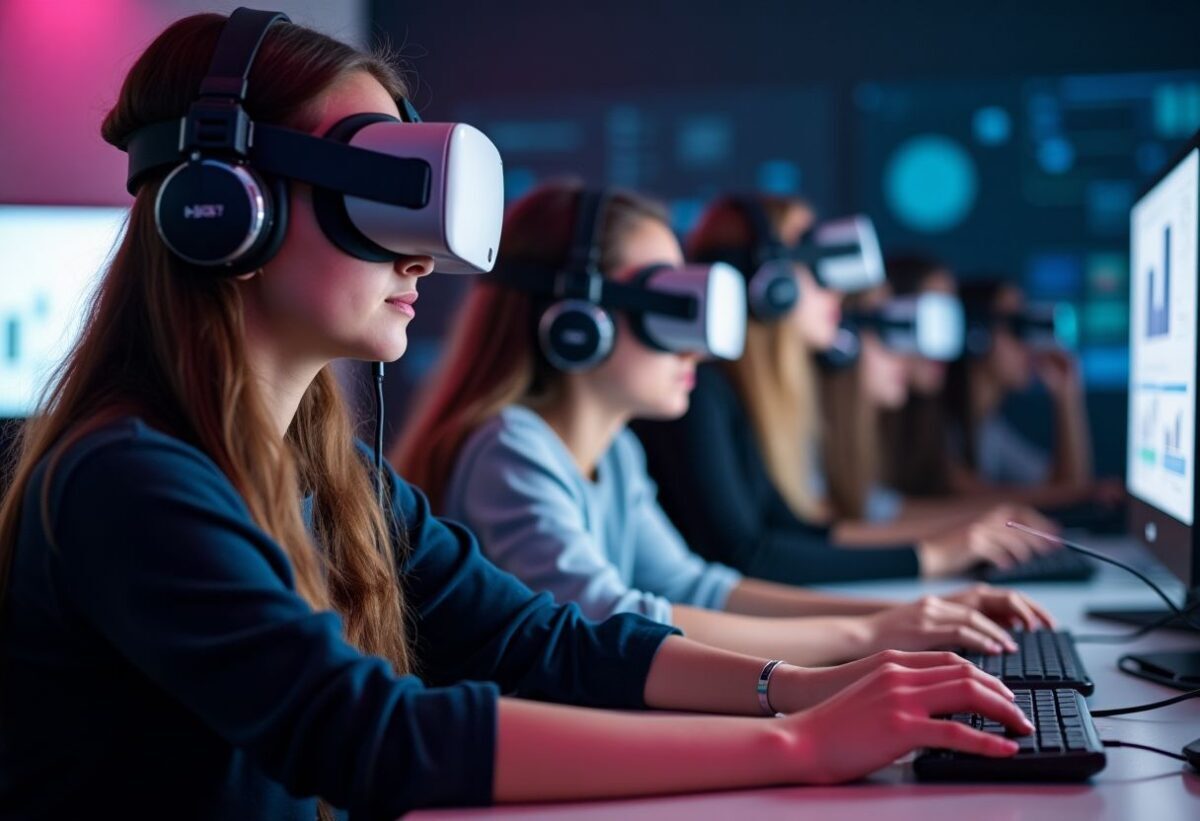
Video games have conquered the world in record time, transforming millions of players into true enthusiasts. Much more than just entertainment, they influence our way of thinking, interacting, and even learning. In this rapidly evolving context, video game schools are emerging as key institutions, shaping the creative and technical minds of tomorrow. These establishments offer innovative training that meets the growing demands of an expanding industry. This educational adventure is as intriguing as it is appealing, sparking curiosity and raising questions. How do these training centers prepare their students for exciting careers? What skills do they impart to ensure their success?
Video Game Careers: A Palette of Possibilities
In the world of video games, professional opportunities are not limited to programming or graphic design. The sector is full of diverse and captivating jobs that require various skills.
- Game Designer: Architects of the gaming experience, they design the mechanics, rules, and flow of a game.
- Developer: Technical experts, they turn concepts into digital reality using complex programming languages.
- 3D Artist: They create the visuals that bring characters and virtual environments to life.
- Game Tester: They step into the player’s shoes to identify bugs and ensure a smooth and enjoyable experience.
These jobs, and many others, make the video game industry a sector rich in creativity and innovation, offering everyone the opportunity to find their place according to their talents and passions.
Key Skills Developed in Video Game Schools
Video game schools stand out for their ability to transform enthusiasts into seasoned professionals through rigorous and specialized training. The acquisition of specific skills is at the heart of their pedagogy.
- Technical Know-How: Students master essential tools and programming languages for game creation.
- Creativity: Practical exercises stimulate imagination, essential for designing original game worlds.
- Team Spirit: Collaborative projects develop communication and project management skills.
These skills, honed by the schools, enable graduates to easily adapt to the demands of the current and future job market.
The Challenges and Issues in the Educational Sector
While the rise of video game schools seems promising, it is nonetheless fraught with challenges that institutions must overcome to ensure their sustainability and relevance.
The speed at which technology evolves means that schools must constantly adapt their programs to stay in line with industry advancements. Training must be flexible enough to incorporate the teaching of the latest trends and innovations. Moreover, attracting experienced professionals to join their teaching staff ensures learning that is directly connected to market realities.
Accreditation and recognition of diplomas represent another major challenge. Schools must offer certifications recognized by the industry to guarantee students credibility in the job market. Finally, financial accessibility is an important issue, as tuition fees can be a barrier for talented students with limited resources.
The Future of Video Game Schools
In the face of a constantly expanding industry, video game schools have a crucial role to play in training the talents of tomorrow. They continue to innovate to meet the expectations of a dynamic sector.
An increasing number of schools are integrating immersive technologies such as augmented reality and virtual reality into their programs, offering students a forward-looking perspective on game design. Furthermore, collaboration with industry companies is becoming more frequent, allowing students to access internships and concrete projects, an essential immersion for their future careers.
Their pedagogical methods are also evolving, with the adoption of hybrid learning practices that combine online and in-person courses. These innovations ensure that schools continue to train competent and versatile professionals, ready to face the challenges of a perpetually changing industry.