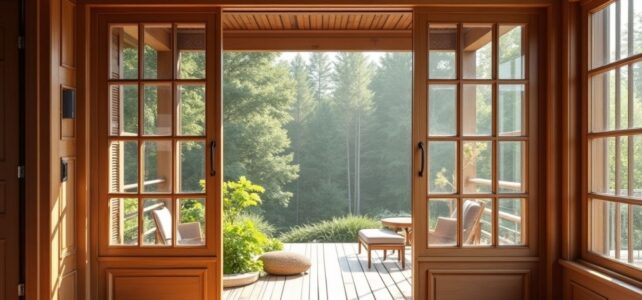
Wooden glass walls are not only an elegant architectural solution for separating spaces while preserving natural light, but they also add a touch of timeless charm to your interior. Choosing a wooden glass wall brings natural warmth and a refined aesthetic to your living spaces, while offering functional flexibility.
Whether you want to create a cozy reading nook or delicately separate your kitchen from your dining room, making your own wooden glass wall is a rewarding project that will enhance your home.
See also : Tips and Inspirations to Transform Your Home into a Wellness Haven
Choosing the right type of wood for your glass wall
The choice of wood is one of the fundamental steps in making a glass wall. Choosing the right type of wood will determine the durability and aesthetic of your creation.
- Oak: This wood is prized for its strength and longevity. It has an attractive grain and ages well over time, adding a rustic character to your interior.
- Pine: Slightly more affordable, pine is easy to work with and offers a clean finish. It can be painted or stained to match your decor.
- Beech: This wood is appreciated for its resistance and light hue. It is perfect for those looking for a bright and contemporary glass wall.
Each type of wood has its own characteristics and will contribute to the visual identity of your space. Consider the humidity of the room where you will install your glass wall to avoid warping.
Further reading : Optimizing Your Budget: An Overview of Housing Assistance in France
Measuring and planning your project
The success of making your wooden glass wall relies on careful planning and precise measurements. Before you start cutting, it is essential to design your project well.
- Determine the exact location of your glass wall and take precise measurements of the height and width of the opening.
- Design a detailed plan including the number of glass panels and their size.
- Consider the thickness of the wooden frames and the spacing between the panels to ensure a harmonious aesthetic.
- Check that your plan complies with safety and building standards.
A well-planned project avoids unpleasant surprises and allows you to manage your time and resources effectively.
Assembling the wooden structure
Once you have chosen your wood and finalized your plans, it’s time to move on to assembling the structure. This step requires skill and precision to ensure the strength and aesthetics of your glass wall.
Start your custom glass wall by carefully cutting the wooden frames according to your measurements. Use a miter saw to ensure clean and precise cuts. Then assemble the structure using appropriate screws or wooden dowels to reinforce the joints. Make sure each piece is well aligned and securely fastened. For optimal results, pre-drill holes to prevent the wood from splitting.
Once the assembly is complete, lightly sand the wood to smooth the surfaces and eliminate rough edges. You can then apply a varnish or stain to protect the wood and enhance its natural color.
Installing the glass panels
The finishing touch of your wooden glass wall lies in the installation of the glass panels, bringing transparency and brightness to your space.
- Select safety glass that meets current standards to ensure the protection of occupants.
- Cut the glass according to the dimensions of your structure, leaving a slight gap to allow for expansion.
- Secure the glass using wooden stops or rubber seals, which will hold the panels in place without damaging them.
- Check that each panel is securely anchored and adjust if necessary.
The installation of the glass panels transforms your wooden structure into a true glass wall, adding elegance and functionality to your interior.