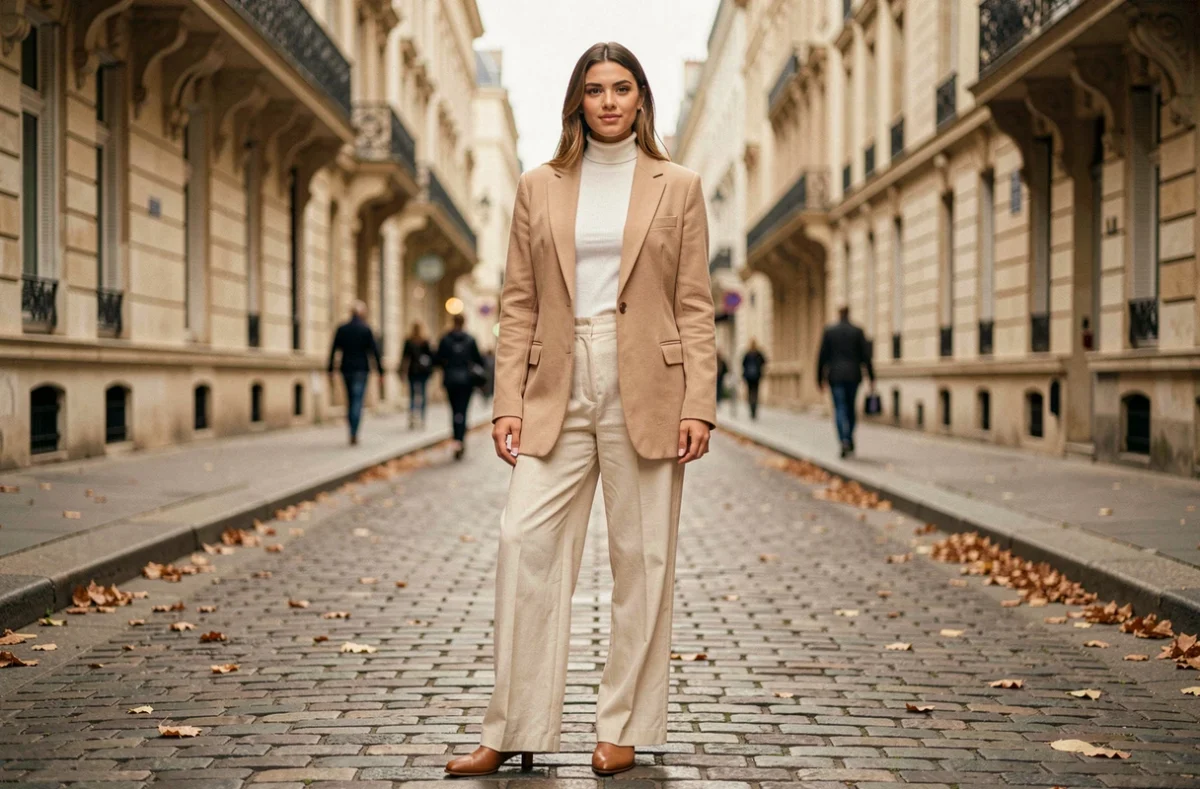
Opening your wardrobe one September morning and noticing that half of the pieces no longer match anything in the window displays is often the starting point for an effective sorting process. This year’s fashion trends are built around precise silhouettes, rethought materials, and a European regulatory framework that changes the game for both brands and buyers.
European textile regulation: what concretely changes in our purchases
Since July 19, 2026, large fashion companies operating in the European Union are no longer allowed to destroy their unsold goods by default. Resale, donation, repair, or second-hand resale become the priority options. Destruction is only permitted in very controlled cases (counterfeits, hazardous products, damaged items).
This change has direct effects on the in-store offer. We see more end-of-line items at reduced prices, second-hand corners in stores that previously did not offer them, and collections that are more streamlined in volume. For those looking to learn everything about Moderne Mode, this is a good starting point to understand how these developments influence the pieces available this season.
In parallel, a European directive on waste (Directive (EU) 2025/1892) requires all member states to implement extended producer responsibility for textiles by April 2028. Brands will need to fund the collection and recycling of what they put on the market. The predictable result: recyclable materials and simplified constructions (single-material, detachable seams) are gaining ground in current collections.
Wide trousers and fluid dresses: the cuts that structure the season
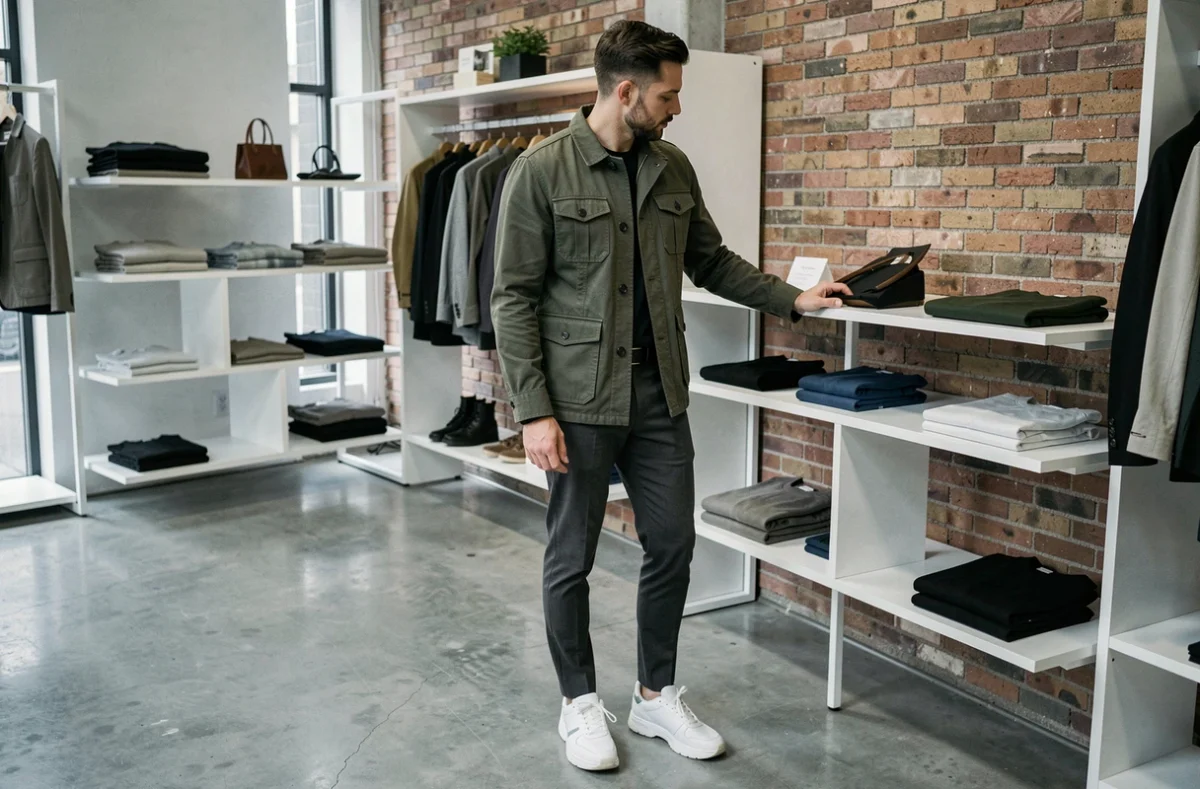
The structured wide trousers remain the most worn piece of the season. High waist, loose fit, clean lines: we find them in almost all spring-summer and autumn-winter collections. Its strength is that it works well with both sneakers and loafers or low-heeled ankle boots.
The long fluid dress has established itself as a classic on the Milan and Paris runways. The houses Loewe, Miu Miu, Saint Laurent, and Tom Ford have all integrated it into their recent shows. It can be worn without a belt for a loose effect, or belted to accentuate the silhouette. It is a piece that adapts to all body types without requiring complex accessories.
How to choose between the two
The question is not to choose one or the other, but to know how we use them in our daily lives. The wide trousers are better suited for active days (walking, commuting, office without strict dress code). The fluid dress works whenever you want a complete outfit in one piece, without thinking about combinations.
Opinions vary on the ideal material for trousers: some prefer a thick cotton that holds its shape, while others prefer a softer linen-viscose blend. The best option is to try both in-store before ordering online.
Autumn-winter trendy colors: a concrete palette for assembling outfits
The seasonal palettes are divided into two distinct families. On one side, saturated shades that catch the eye. On the other, textured neutrals that serve as a base.
- Bright shades: burnt orange, butter yellow, vibrant pink, and sky blue. They are used on a single piece (a top, a short jacket, a bag) to avoid the suit effect.
- Worked neutrals: olive green, warm beige, heather gray. These colors work in a total look or as a background for an outfit, paired with a colorful piece.
- Black remains the safe bet, but the trend is to break it up with an unusual material (soft leather, openwork knit, matte satin) rather than wearing it in a solid block.
Pinterest Predicts research data confirm the rise of bright colors associated with simple cuts. The idea is not to multiply colors in the same outfit, but to use color as a unique focal point.
Sustainable materials and style: what we can demand from brands this year
With the implementation of new European obligations, brands’ “eco-responsible” discourse becomes verifiable. Labels are evolving. We are starting to see precise mentions of composition, country of manufacture, and recyclability of the garment.
Specifically, here’s what to look for on the label before buying:
- Single-material composition (100% cotton, 100% wool, 100% linen) facilitates recycling at the end of life. Synthetic-natural blends complicate sorting.
- The mention of a take-back or repair program offered by the brand, a sign that it anticipates EPR regulations.
- The absence of unnecessary chemical treatments (wrinkle-resistant, stain-resistant) on pieces that do not need them, such as raw denim or a thick knit sweater.
We are not talking about sacrificing style for the planet here. The best-constructed pieces this season, those that hold up for several seasons without deforming, are often those that also meet environmental criteria. A barrel jean in thick denim, a short jacket in cotton twill, an oversized merino wool sweater: these basics transcend trends because their material and cut are designed to last.
The trap of seasonal greenwashing
A “conscious” or “green” capsule launched at the same time as a main collection three times larger changes nothing about the model. Looking at the total volume produced by a brand is more revealing than a dedicated line of ten references. Brands that are genuinely reducing the number of models per season are the ones taking the shift seriously.
This year’s modern fashion revolves around precise choices: a cut that works well for daily wear, a streamlined palette, materials that can be traced. The new European rules push in this direction, and collections are following suit. A barrel jean, a fluid dress, and a short jacket in cotton twill already cover most situations of the season.